You Have the Creative Idea. Now You Need the Plan.
I’ve been creating and using business plans for over 10 years.
Not because I particularly enjoy writing business plans, but because having a good idea and knowing how to turn it into a viable business are two very different things.
As creatives, we’re usually pretty good at the first part. We can see the brand, the product, the experience and where we want to take it. The difficult part is stepping outside of the creative idea and asking the less exciting — but important — questions.
Who is this actually for?
What problem am I solving?
Who else is doing it?
How am I going to reach people?
What does this need to make financially?
And what happens if Plan A doesn’t work?
Over the years, I built a framework that helped me answer those questions
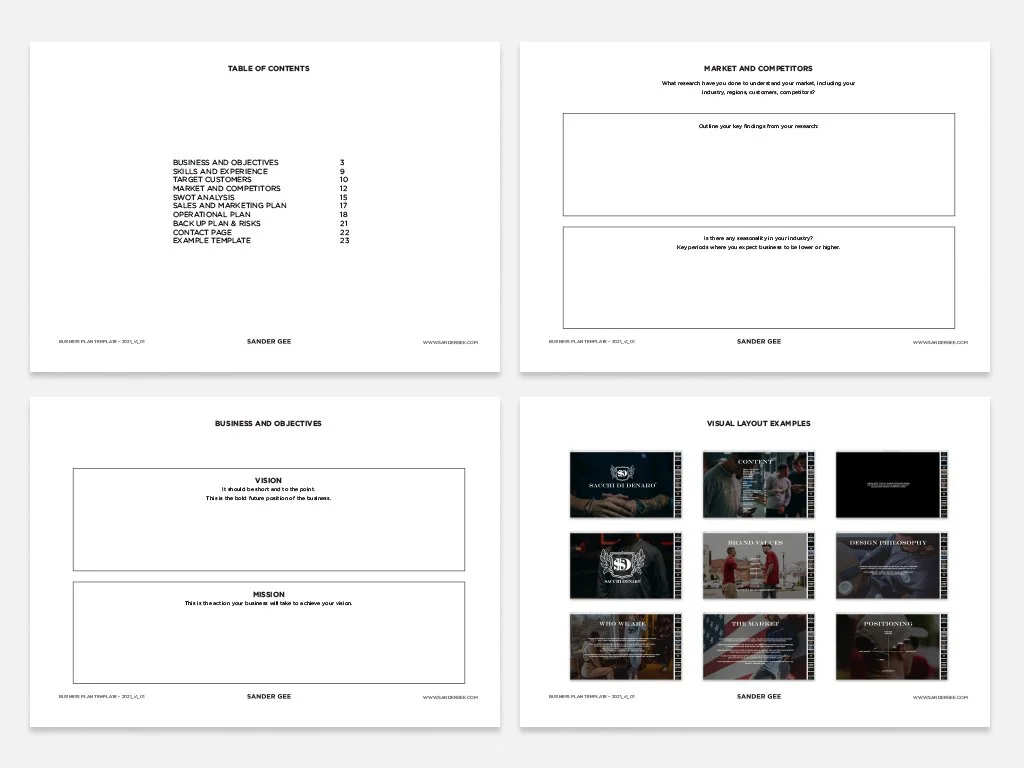
From my own business to the classroom
I originally created the framework for myself and continued developing it as my own business evolved.
When I started teaching, I began using the same approach with students and creative entrepreneurs. Again and again, I saw the same challenge: the ideas were there, but turning them into something structured, realistic and communicable was much harder.
So instead of asking people to simply “write a business plan,” I broke the process down into individual questions and manageable sections.
Vision. Mission. Customers. Market. Competitors. SWOT. Marketing. Operations. Risk.
One thing at a time.
And it worked.
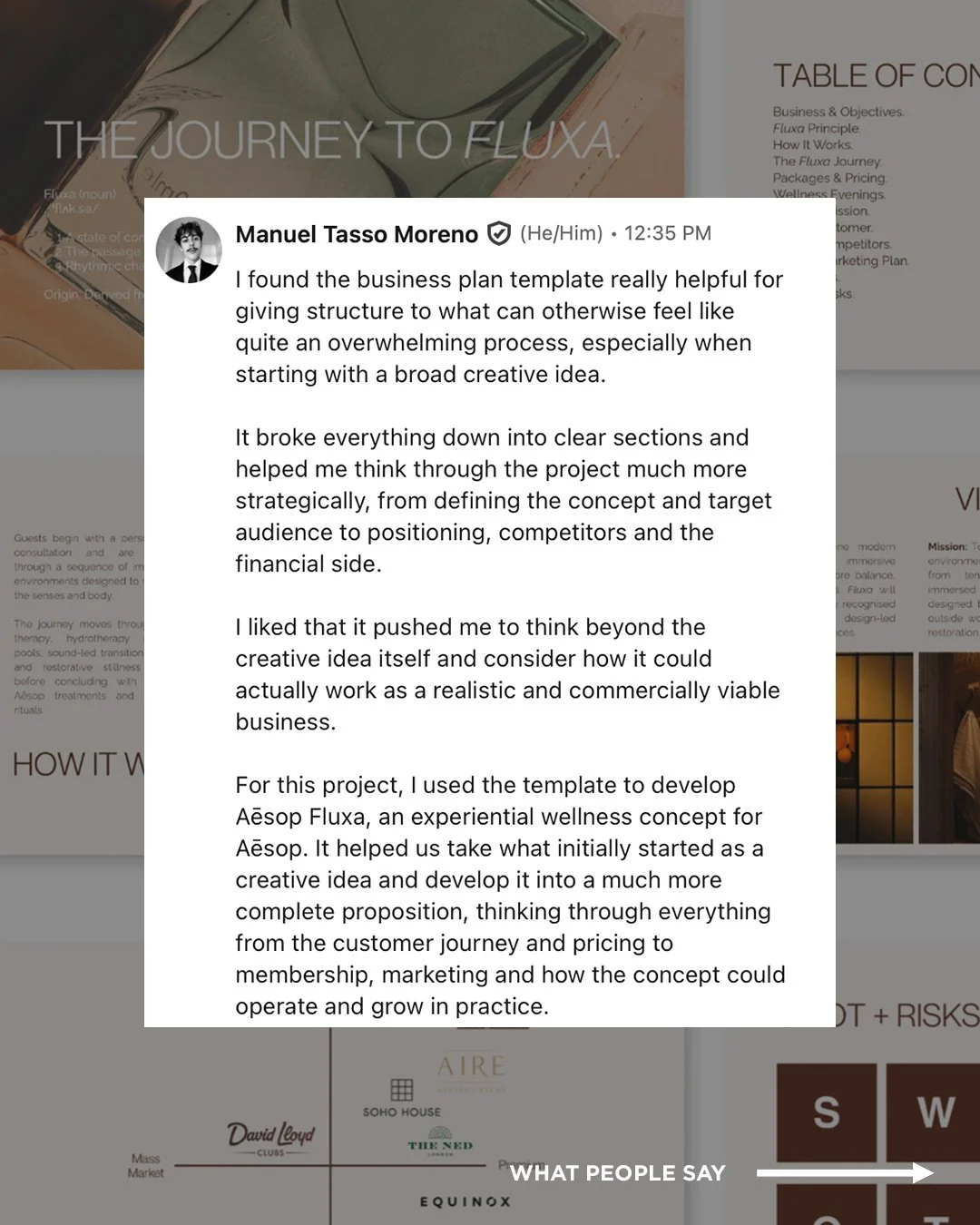
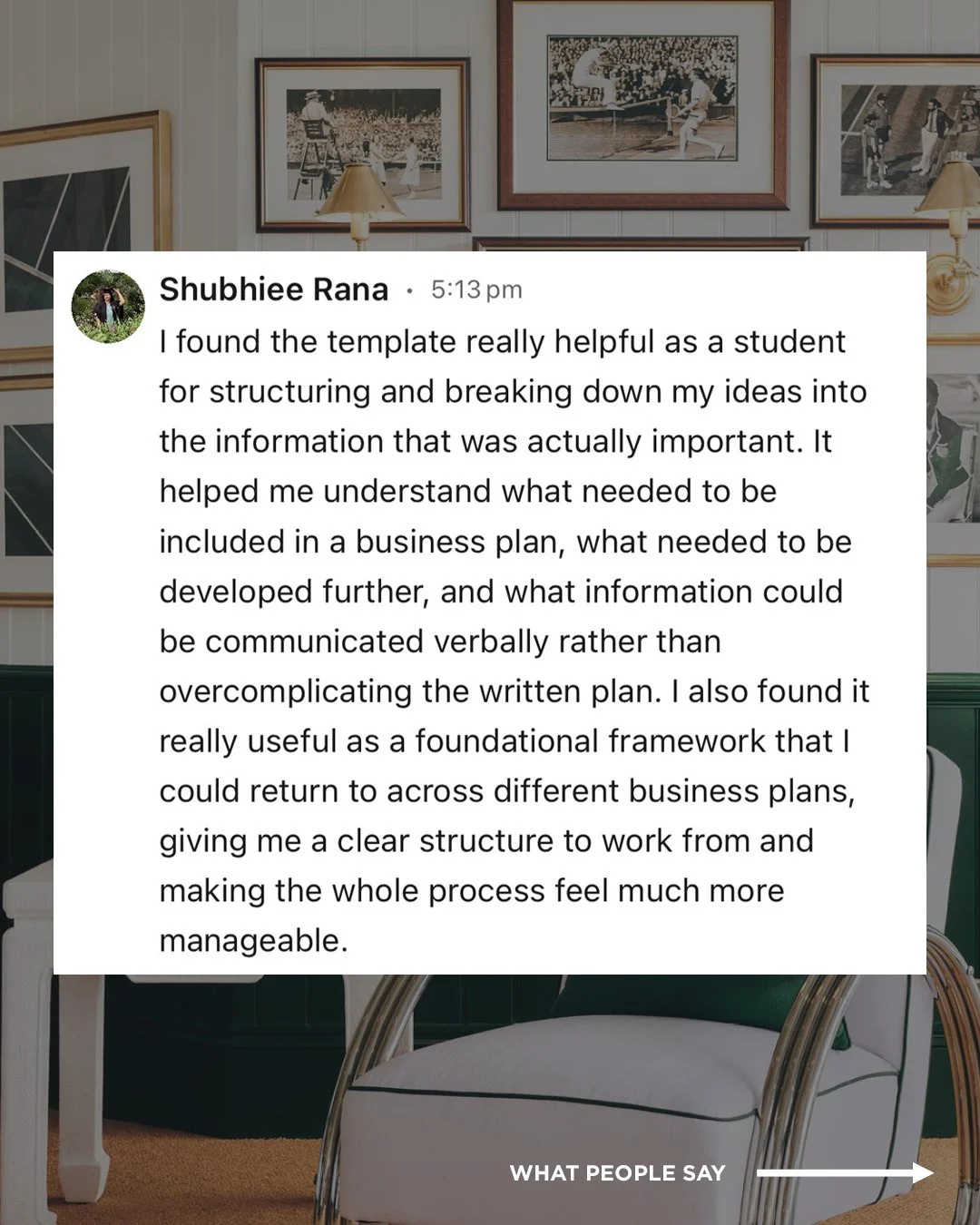
One piece of recent feedback summed it up particularly well:
The framework helped them understand what actually needed to be included, what needed further development, and what didn't need to be overcomplicated.
That’s exactly what I wanted it to do.
So I turned it into a template.
After years of using, teaching and refining the framework, I’ve now made it available as a 24-page Business Plan Template.
It’s designed particularly for creatives, freelancers, students and early-stage founders who have an idea but need a clearer structure around it.
This isn’t about predicting exactly where your business will be in five years.
A good business plan should help you think.
It should challenge the assumptions behind your idea, expose the areas you haven’t considered yet and give you something you can keep returning to as the business develops.
The creative idea is only the beginning.
Now build the plan.